
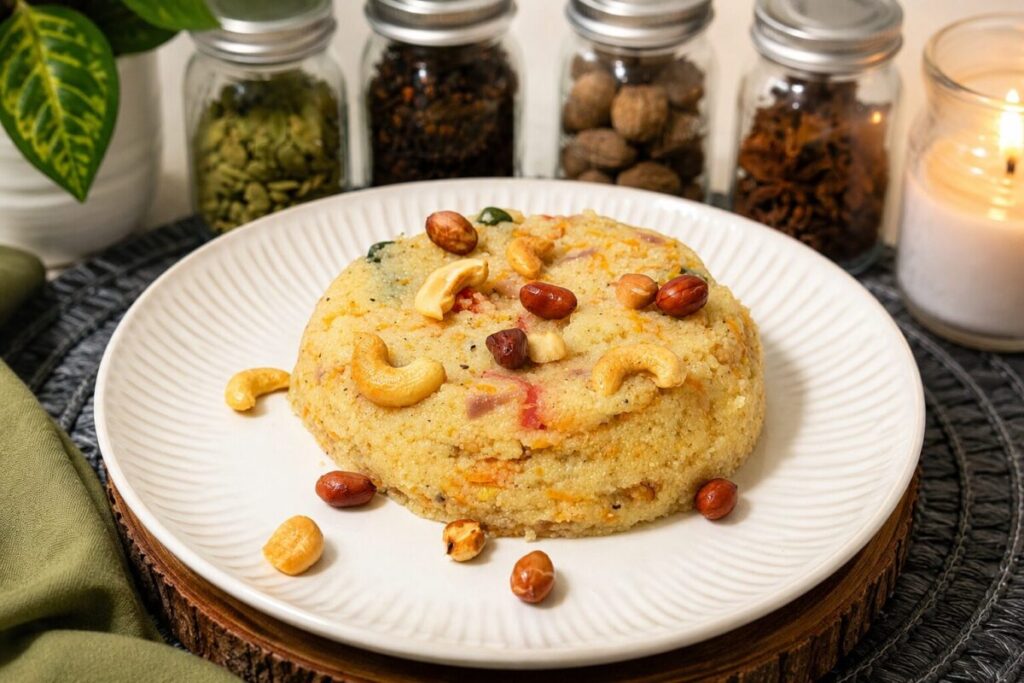
Upma is a breakfast most Indian households have grown up with. Moreover, It is warm, comforting, and endlessly adaptable. This Easy Fluffy Sooji Upma Recipe takes simple pantry ingredients and turns them into something deeply satisfying. And it is ready in just fifteen minutes.
What Makes This Sooji Upma Recipe Fluffy?
The secret lies in two things: properly roasted sooji and the right water ratio. Moreover, Roasting semolina in ghee until it turns fragrant makes all the difference. Additionally, It deepens the flavour. It also ensures every grain stays separate when you add water. The result is a light, non-clumpy texture that makes this upma so enjoyable.
A Well-Tempered Base
This recipe uses a generous tempering of ghee, chana dal, urad dal, curry leaves, ginger, and green chillies. Cashews and peanuts are roasted to a golden crunch. They add a lovely texture to every bite. Chopped vegetables bring colour and nutrition. Together, they make this feel like a complete, balanced meal, not just a simple porridge.
The Finishing Touch
The upma finishes with lime juice and fresh cilantro. These two additions are non-negotiable. Lime brightens everything. It cuts through the richness of the ghee beautifully. Finally, Cilantro adds a fresh, herby note that lifts the whole dish. Serve it piping hot with coconut chutney or chai on the side.
Why This Easy Fluffy Sooji Upma Is Perfect for Breakfast
- Ready in 15 Minutes: First, from start to finish, this is a genuinely quick breakfast, ideal for busy weekday mornings.
- One Pan, Minimal Washing Up: Moreover, everything comes together in a single pan, making this as convenient as it is delicious.
- Fluffy, Never Sticky: Additionally, roasting the sooji first is the technique that guarantees a light, grain-separate texture every single time.
- Full of Texture: Furthermore, crunchy cashews and peanuts, tender vegetables, and soft semolina create a deeply satisfying bite in every spoonful.
- Completely Customisable: For example, use any vegetables you have on hand, carrot, peas, corn, beans, bell pepper, and adjust the spice level to your preference.
- Wholesome & Nourishing: With semolina, dals, nuts, and vegetables, this is a genuinely balanced breakfast with carbohydrates, protein, and fibre.
- Kid-Friendly: Mild in spice (adjustable), soft in texture, and comforting in flavour, children love it.
Ingredients
For Roasting
- Sooji (semolina / rava) — 1 cup
- Ghee — 1 tbsp (for roasting the sooji)
For the tempering & Base
- Ghee — 1 tbsp (for the tempering)
- Cashews — 8–10 pieces
- Peanuts — 2 tbsp
- Chana dal — 1 tbsp
- Urad dal — 1 tbsp
- Green chillies — 2, finely chopped (adjust to taste)
- Ginger — 1 tsp, finely chopped or grated
- Curry leaves — 8–10 leaves, fresh
- Onion — 1 small, finely chopped
Vegetables & Seasoning
- Mixed vegetables — ¾ cup, finely chopped (carrot, bell pepper, beans — or any of your choice)
- Salt — 1 tsp, or to taste
- Black pepper — ¼ tsp
- Water — 2¼ cups
To Finish
- Fresh cilantro (coriander) -2 tbsp, chopped
- Lime juice – 1 tsp, freshly squeezed
💡 Water ratio: The classic ratio is 1 cup sooji to 2–2½ cups water. This recipe uses 2¼ cups for a soft but not mushy result. If you prefer firmer upma, reduce to 2 cups.
How to Make This Sooji Upma Recipe
Roast the Sooji
Heat 1 tablespoon of ghee in a wide, heavy-bottomed pan over medium heat. Add the sooji. Roast it while stirring continuously. Keep going for 4–5 minutes.As a result, the sooji will turn fragrant, look slightly dry, and take on a very light golden colour.
Do not skip this step. It separates a fluffy, flavourful upma from a sticky, dense one. Next, once roasted, transfer the sooji to a plate immediately. Set it aside to cool slightly.
Roast the Cashews & Peanuts
Use the same pan, no need to wash it. Add the cashews and peanuts. Add a few drops of ghee if needed. Roast over medium heat for 1–2 minutes. They should turn golden and smell fragrant. Than, remove them from the pan and keep aside. These go on top as garnish at the end.
Prepare the Tempering
Add the remaining 1 tablespoon of ghee to the pan. Let it heat up. Add the chana dal and urad dal. Stir and cook over medium heat for about 1 minute. They will turn light golden and smell nutty.
Now add the green chillies, ginger, and curry leaves. Stand back slightly, curry leaves sputter in hot ghee. Sauté for 30 seconds until everything smells fragrant.
Cook the Onion & Vegetables
Add the chopped onion. Cook over medium heat for about 2 minutes. Stir occasionally. The onion should turn soft and translucent. Do not let it brown.
Next, add the chopped vegetables. Cook for 2 more minutes. The vegetables will be partially cooked at this stage. They finish cooking when you add the sooji and water.
Add Water and Bring to a Boil
Meanwhile, add salt and black pepper to the pan. Stir well. Pour in 2¼ cups of water. Bring it to a rolling boil over high heat. Taste the water now. It should taste slightly saltier than you want the final dish. The sooji absorbs salt as it cooks.
Add the Roasted Sooji
Than,reduce the heat to low. Use one hand to pour the roasted sooji slowly into the boiling water. Use a thin, steady stream. Stir continuously with your other hand. This prevents lumps from forming.
Keep stirring for 1–2 minutes. All the sooji should mix in fully. You will have a smooth, thick mixture with no lumps.
Cover and Cook
Cover the pan with a tight-fitting lid. Cook on the lowest flame for 2–3 minutes. The sooji absorbs any remaining moisture during this time. It cooks through completely. The result is a soft, fluffy texture.
Open the lid after 2–3 minutes. Gently fluff the upma with a fork or spatula. It should look light, well-separated, and fully cooked.
Garnish and Serve
Finally, add the roasted cashews and peanuts. Add the fresh cilantro and lime juice. Gently mix everything together. Do not over-stir. The upma should stay light and fluffy.
Serve immediately and piping hot. Upma tastes best straight from the pan.
Tips for Perfect Sooji Upma Every Time
- Always roast the sooji: This is the most important step. Unroasted sooji turns sticky and dense. Roasted sooji stays fluffy and fragrant.
- Hot water is essential: Always add sooji to boiling water. Cold water causes lumps and uneven cooking.
- Stir while adding sooji: Never dump all the sooji at once. Add it in a slow, steady stream and stir continuously with your other hand.
- Use fresh curry leaves: Dried curry leaves lose their aroma. Fresh curry leaves make a big difference to the tempering.
- Do not skip the lime: Lime juice balances the richness of the ghee. Add it just before serving, not during cooking.
- Cook vegetables lightly: Two minutes is enough. They continue cooking when sooji and water go in. Overcooking makes them mushy.
- Cover and steam: This final step gives upma its fluffy texture. Do not skip it. Do not open the lid too early.
Variations & Customisations
Tomato Upma
Add 1 medium tomato, finely chopped, after the onion softens. Cook for 2 minutes until the tomato breaks down. It adds a gentle tanginess and a pink-red colour. This is a very popular South Indian variation.
Vermicelli Upma (Semiya Upma)
Replace sooji with roasted vermicelli (semiya). The method stays the same — roast first, then cook with tempered spices and water. Vermicelli upma has a lighter texture. Children love it.
Poha Upma
Replace sooji with thick poha (flattened rice). Soak and drain the poha first. Skip the roasting step. Add it directly after the tempering and vegetables. Poha upma is lighter and quicker — ready in under 10 minutes.
No-Onion No-Garlic Version
Simply skip the onion. The tempering of dals, chillies, ginger, and curry leaves still gives great flavour. This version works well for fasting days or personal dietary preferences.
Masala Upma
Add ½ tsp turmeric powder and ¼ tsp sambar powder with the vegetables. This gives a deeper, spiced flavour. The turmeric adds a beautiful golden colour. The result is a complex, South Indian-style taste.
Vegetable-Loaded Upma
Double the vegetables. Add peas, corn, grated carrot, chopped spinach, or diced potato. More vegetables mean more fibre, more vitamins, and a more wholesome meal overall.
What to Serve with Sooji Upma
- Coconut chutney — the classic, most traditional accompaniment to upma
- Tomato chutney or raw onion chutney — for a tangy, spicy side
- A cup of hot masala chai — the quintessential Indian breakfast pairing
- Plain yogurt or raita — cooling and complementary to the warm spiced upma
- Pickle (achar) — a small spoonful of mango or lime pickle adds a punchy, tangy contrast
- Filter coffee or South Indian-style coffee — especially if serving this as a South Indian breakfast
Storage & Make-Ahead Tips
Best enjoyed fresh: Upma tastes best straight from the pan. It is lighter, fluffier, and more fragrant when freshly made.
Refrigerator: Store leftover upma in an airtight container. Keep it in the fridge for up to 2 days. It firms up as it cools, this is normal.
Reheating: Reheat in a pan over low heat. Add a splash of water (1–2 tablespoons). Stir gently and cover for 1–2 minutes. It turns fluffy again. You can also microwave it — sprinkle water, cover, and heat for 60–90 seconds.
Make-ahead tip: Roast a big batch of sooji in advance. Store it in an airtight jar at room temperature for up to 2 weeks. On busy mornings, start directly from the tempering step. It saves 5 minutes every time.
Nutrition Information (Approximate, Per Serving)
Values are based on 1 serving (half the recipe) made with ghee, cashews, peanuts, dals, and mixed vegetables as listed. Values will vary based on vegetables used and exact ghee quantity.
| Nutrient | Per Serving (Approx.) |
| Calories | ~320–360 kcal |
| Protein | ~9–11 g |
| Carbohydrates | ~48 g |
| Dietary Fibre | ~5 g |
| Healthy Fats | ~12 g |
| Iron | ~2.5 mg |
| Magnesium | ~40 mg |
| Vitamin C | ~15 mg (from lime & vegetables) |
🌿 Sooji Upma is a naturally balanced breakfast — semolina provides energy-giving carbohydrates, the dals and nuts add protein, and the vegetables bring fibre and micronutrients. Using ghee (rather than refined oil) also adds the benefits of healthy, easily digestible saturated fat.
Frequently Asked Questions
Why is my upma sticky and dense instead of fluffy?Two things usually cause this. Either the sooji did not roast long enough, or you added too much water. Roast the sooji until it smells fragrant and turns lightly golden. Also make sure you add sooji to boiling water — not warm water. Add it slowly while stirring.
Can I make upma without ghee?Yes. Use any neutral cooking oil — sunflower oil, refined oil, or coconut oil all work. But ghee gives upma its rich, nutty flavour. Even a small amount makes a big difference. Use it if you can.
Can I use oil instead of ghee to make it vegan?Absolutely. Replace ghee with coconut oil or any plant-based oil. The flavour changes slightly but stays delicious. Coconut oil pairs wonderfully with curry leaves. It gives the upma a subtle South Indian character.
My upma has lumps — how do I fix it?Lumps form when you add sooji too fast or the water is not boiling strongly. If lumps appear, press them against the side of the pan with a spoon. Stir briskly. They will dissolve. Next time, pour the sooji in a slower, thinner stream.
Is upma healthy for weight loss?Upma works well as a weight-loss breakfast when you make it mindfully. Semolina provides complex carbohydrates for steady energy. To keep it lighter, add more vegetables and use less ghee. The dals add protein and help you feel full longer.
Sooji Upma
Equipment
- 1 Saucepan or non-stick pan
- 1 Spatula
- 1 Chopping Board
Ingredients
For Roasting
- 1 cup Sooji
- 2 tbsp Ghee for roasting the sooji & for the tempering
For the Tempering & Base
- 10 pieces Cashews
- 2 tbsp Peanuts
- 1 tbsp Chana dal
- 1 tbsp Urad dal
- 2 nos Green chillies finely chopped (adjust to taste)
- 1 tsp Ginger finely chopped or grated
- 8-10 leaves Curry leaves
- 1 small Onion finely chopped
Vegetables & Seasoning
- 3/4 cup Mixed vegetables finely chopped (carrot, bell pepper, beans — or any of your choice)
- 1 tsp Salt or to taste
- 1/4 tsp Black pepper
- 2¼ cups Water
To Finish
- 2 tbsp Fresh cilantro chopped
- 1 tsp Lime juice freshly squeezed
Instructions
Roast the Sooji
- Heat 1 tablespoon of ghee in a wide, heavy-bottomed pan over medium heat. Add the sooji. Roast it while stirring continuously. Keep going for 4–5 minutes. The sooji will turn fragrant, look slightly dry, and take on a very light golden colour.
- Do not skip this step. It separates a fluffy, flavourful upma from a sticky, dense one. Once roasted, transfer the sooji to a plate immediately. Set it aside to cool slightly.
Roast the Cashews & Peanuts
- Use the same pan — no need to wash it. Add the cashews and peanuts. Add a few drops of ghee if needed. Roast over medium heat for 1–2 minutes. They should turn golden and smell fragrant. Remove them from the pan and keep aside. These go on top as garnish at the end.
Prepare the Tempering
- Add the remaining 1 tablespoon of ghee to the pan. Let it heat up. Add the chana dal and urad dal. Stir and cook over medium heat for about 1 minute. They will turn light golden and smell nutty.
- Now add the green chillies, ginger, and curry leaves. Stand back slightly — curry leaves sputter in hot ghee. Sauté for 30 seconds until everything smells fragrant.
Cook the Onion & Vegetables
- Add the chopped onion. Cook over medium heat for about 2 minutes. Stir occasionally. The onion should turn soft and translucent. Do not let it brown.
- Add the chopped vegetables. Cook for 2 more minutes. The vegetables will be partially cooked at this stage. They finish cooking when you add the sooji and water.
Add Water and Bring to a Boil
- Add salt and black pepper to the pan. Stir well. Pour in 2¼ cups of water. Bring it to a rolling boil over high heat. Taste the water now. It should taste slightly saltier than you want the final dish. The sooji absorbs salt as it cooks.
Add the Roasted Sooji
- Reduce the heat to low. Use one hand to pour the roasted sooji slowly into the boiling water. Use a thin, steady stream. Stir continuously with your other hand. This prevents lumps from forming.
- Keep stirring for 1–2 minutes. All the sooji should mix in fully. You will have a smooth, thick mixture with no lumps.
Cover & Cook
- Cover the pan with a tight-fitting lid. Cook on the lowest flame for 2–3 minutes. The sooji absorbs any remaining moisture during this time. It cooks through completely. The result is a soft, fluffy texture.Open the lid after 2–3 minutes. Gently fluff the upma with a fork or spatula. It should look light, well-separated, and fully cooked.
Garnish & Serve
- Add the roasted cashews and peanuts. Add the fresh cilantro and lime juice. Gently mix everything together. Do not over-stir. The upma should stay light and fluffy.Serve immediately and piping hot. Upma tastes best straight from the pan.
Notes