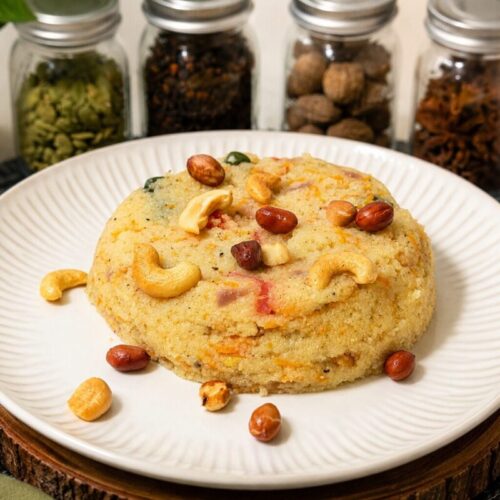
Sooji Upma
Upma is a breakfast most Indian households have grown up with. It is warm ,comforting, and endlessly adaptable. This Easy Fluffy Sooji Upma takes simple pantry ingredients and turns them into something deeply satisfying. And it is ready in just fifteen minutes.
Equipment
- 1 Saucepan or non-stick pan
- 1 Spatula
- 1 Chopping Board
Ingredients
For Roasting
- 1 cup Sooji
- 2 tbsp Ghee for roasting the sooji & for the tempering
For the Tempering & Base
- 10 pieces Cashews
- 2 tbsp Peanuts
- 1 tbsp Chana dal
- 1 tbsp Urad dal
- 2 nos Green chillies finely chopped (adjust to taste)
- 1 tsp Ginger finely chopped or grated
- 8-10 leaves Curry leaves
- 1 small Onion finely chopped
Vegetables & Seasoning
- 3/4 cup Mixed vegetables finely chopped (carrot, bell pepper, beans — or any of your choice)
- 1 tsp Salt or to taste
- 1/4 tsp Black pepper
- 2¼ cups Water
To Finish
- 2 tbsp Fresh cilantro chopped
- 1 tsp Lime juice freshly squeezed
Instructions
Roast the Sooji
- Heat 1 tablespoon of ghee in a wide, heavy-bottomed pan over medium heat. Add the sooji. Roast it while stirring continuously. Keep going for 4–5 minutes. The sooji will turn fragrant, look slightly dry, and take on a very light golden colour.
- Do not skip this step. It separates a fluffy, flavourful upma from a sticky, dense one. Once roasted, transfer the sooji to a plate immediately. Set it aside to cool slightly.
Roast the Cashews & Peanuts
- Use the same pan — no need to wash it. Add the cashews and peanuts. Add a few drops of ghee if needed. Roast over medium heat for 1–2 minutes. They should turn golden and smell fragrant. Remove them from the pan and keep aside. These go on top as garnish at the end.
Prepare the Tempering
- Add the remaining 1 tablespoon of ghee to the pan. Let it heat up. Add the chana dal and urad dal. Stir and cook over medium heat for about 1 minute. They will turn light golden and smell nutty.
- Now add the green chillies, ginger, and curry leaves. Stand back slightly — curry leaves sputter in hot ghee. Sauté for 30 seconds until everything smells fragrant.
Cook the Onion & Vegetables
- Add the chopped onion. Cook over medium heat for about 2 minutes. Stir occasionally. The onion should turn soft and translucent. Do not let it brown.
- Add the chopped vegetables. Cook for 2 more minutes. The vegetables will be partially cooked at this stage. They finish cooking when you add the sooji and water.
Add Water and Bring to a Boil
- Add salt and black pepper to the pan. Stir well. Pour in 2¼ cups of water. Bring it to a rolling boil over high heat. Taste the water now. It should taste slightly saltier than you want the final dish. The sooji absorbs salt as it cooks.
Add the Roasted Sooji
- Reduce the heat to low. Use one hand to pour the roasted sooji slowly into the boiling water. Use a thin, steady stream. Stir continuously with your other hand. This prevents lumps from forming.
- Keep stirring for 1–2 minutes. All the sooji should mix in fully. You will have a smooth, thick mixture with no lumps.
Cover & Cook
- Cover the pan with a tight-fitting lid. Cook on the lowest flame for 2–3 minutes. The sooji absorbs any remaining moisture during this time. It cooks through completely. The result is a soft, fluffy texture.Open the lid after 2–3 minutes. Gently fluff the upma with a fork or spatula. It should look light, well-separated, and fully cooked.
Garnish & Serve
- Add the roasted cashews and peanuts. Add the fresh cilantro and lime juice. Gently mix everything together. Do not over-stir. The upma should stay light and fluffy.Serve immediately and piping hot. Upma tastes best straight from the pan.
Notes
Upma is a naturally balanced breakfast — semolina provides energy-giving carbohydrates, the dals and nuts add protein, and the vegetables bring fibre and micronutrients. Using ghee (rather than refined oil) also adds the benefits of healthy, easily digestible saturated fat.
Sooji tip: Use medium-coarse sooji (also called Bombay rava) for the best upma texture. Fine sooji can turn sticky; coarse sooji gives a fluffier, more distinct grain.